
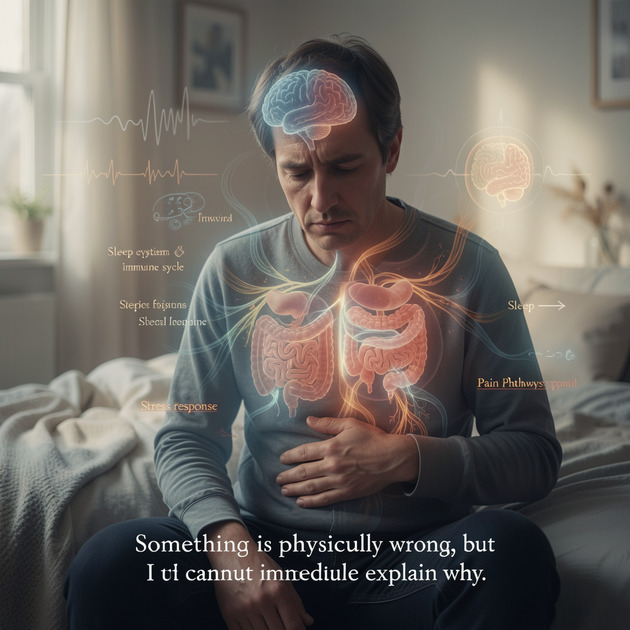
Depression is not a condition that lives only in the mind. It lives in the body — in the gut, the immune system, the sleep-wake cycle, the pain pathways, and the physiological stress response. For a significant proportion of people who are depressed, the body symptoms are not secondary to the psychological ones: they are the primary way the depression makes itself known. Understanding the hidden signs of depression — the physical symptoms that have nothing to do with sadness or tearfulness — is clinically important, both for those experiencing them and for the clinicians and loved ones who might otherwise miss them.
Why Depression Produces Physical Symptoms
The relationship between depression and physical symptoms is not metaphorical. It is neurobiological. Depression involves dysregulation of multiple overlapping biological systems — the HPA (hypothalamic-pituitary-adrenal) axis, the autonomic nervous system, the immune-inflammatory system, and the gut-brain axis — all of which have direct physical effects.
The HPA Axis and Chronic Stress Response: Major depressive disorder is associated with dysregulation of the HPA axis — the central biological stress response system. Chronically elevated cortisol (a consequence of HPA hyperactivation) has documented effects on metabolism, immune function, gut motility, sleep architecture, cardiovascular function, and pain sensitivity. The physical symptoms of depression are, in part, the physical consequences of a chronically over-activated stress response system.
Neuroinflammation: Research by Dr. Charles Raison and colleagues (2006, Archives of General Psychiatry) and subsequently validated by multiple meta-analyses, documents that depression is associated with elevated levels of pro-inflammatory cytokines — immune signalling molecules that, among other effects, produce “sickness behaviour”: fatigue, pain, social withdrawal, and altered cognition. This is now understood as a bidirectional relationship: depression activates inflammatory processes, and inflammation contributes to depression.
The Gut-Brain Axis: The enteric nervous system — the complex neural network governing the gastrointestinal tract — is in continuous bidirectional communication with the brain via the vagus nerve and multiple other pathways. Research by Emeran Mayer (UCLA) and colleagues has documented that disruption of the gut microbiome is associated with depression, and that depression produces significant effects on gastrointestinal motility, sensitivity, and function.
The Hidden Physical Signs of Depression
Unexplained Chronic Pain
One of the most clinically significant — and most frequently missed — physical presentations of depression is unexplained or medically unexplained chronic pain. Joint pain, back pain, headaches, and muscular pain that do not have a clear structural cause are documented symptoms of depression.
The mechanism involves several pathways: elevated cortisol lowers pain thresholds; neuroinflammation generates pain signals; and the dysregulation of the descending pain inhibition pathways (serotonin and norepinephrine are involved in both mood regulation and pain modulation) means that the normal mechanisms by which the brain suppresses pain signals are compromised in depression.
Research by Fishbain and colleagues (1997, Psychosomatic Medicine) found that chronic pain disorders and major depressive disorder co-occur at rates significantly higher than chance. The relationship is bidirectional: depression lowers the threshold for pain experience, and chronic pain generates depression through its impact on functioning, sleep, and quality of life.
When a person presents to a physician with chronic, medically unexplained pain — particularly when accompanied by fatigue, sleep disruption, and withdrawal from activities — depression should always be assessed.
Persistent Fatigue That Sleep Does Not Resolve
Depression-related fatigue is one of the most universally reported and most disabling physical symptoms of the condition. It is not the tiredness of insufficient sleep — it is not resolved by sleeping more. It is the profound, heavy exhaustion of a physiological system that has been running in a state of chronic dysregulation.
This fatigue affects both physical and mental energy. Getting out of bed requires an effort that feels disproportionate to the task. Routine activities — preparing a meal, making a phone call, answering an email — become effortful in ways they were not before. Physical movement, which once felt natural, begins to feel like moving through resistance.
The neurobiological basis of this fatigue includes disrupted dopamine and norepinephrine signalling (both involved in motivation and energy), chronic elevation of inflammatory cytokines (which produce fatigue as a direct physiological effect), and disrupted sleep architecture that prevents the restorative sleep stages from occurring even when the person is in bed for adequate hours.
Gastrointestinal Symptoms
Gastrointestinal complaints — nausea, abdominal pain, changes in bowel habits, bloating, or a persistently “unsettled” gut — are frequently reported by people with depression and are often attributed to other causes (diet, irritable bowel syndrome, stress) before the underlying depression is identified.
The gut contains more neurons than the spinal cord and is in continuous bidirectional communication with the brain. Depression disrupts this communication: altered gut motility, increased intestinal permeability (“leaky gut”), and changes in the gut microbiome are all documented in depression research. Dr. Emeran Mayer’s work, summarised in The Mind-Gut Connection (Harper Wave, 2016), provides an accessible overview of this research and its clinical implications.
Importantly, approximately 90% of the body’s serotonin is produced in the gut. Disrupted serotonin signalling — a feature of depression — therefore affects gut function directly, contributing to the gastrointestinal symptoms that many depressed people experience.
Headaches and Migraines
Depression is associated with an elevated risk of headache disorders, particularly tension-type headaches and migraines. Research by Breslau and colleagues (2000, Archives of General Psychiatry) documented a bidirectional relationship between migraine and depression — each condition increases the risk of the other.
The mechanism is partially shared neurobiology: both depression and migraine involve serotonin system dysregulation, inflammatory processes, and autonomic nervous system disruption. The headaches of depression are often described as a persistent, low-grade pressure or tightness — distinct from the acute, severe pain of a migraine event, though both are more common in depressed individuals.
Changes in Appetite and Weight
Significant, unintentional changes in appetite and weight — either decreased appetite and weight loss, or increased appetite (particularly for carbohydrate-rich foods) and weight gain — are formal DSM-5 diagnostic criteria for major depressive disorder.
The direction of the change varies between individuals and between episodes. The reduced appetite type is associated with anhedonia affecting the hedonic properties of food. The increased appetite type (more common in atypical depression) is associated with emotional eating — using food to temporarily stimulate the reward system that depression has suppressed.
Weight changes in depression are not simply lifestyle issues. They have direct neurobiological drivers — disrupted leptin and ghrelin signalling (the hormones governing hunger and satiety), altered reward system responsivity to food, and the comfort-seeking behaviour driven by a dysphoric mood state.
Sleep Disruption (Insomnia and Hypersomnia)
Sleep disruption is present in approximately 90% of people with major depressive disorder (Riemann et al., 2001, Sleep Medicine Reviews), making it one of the most reliable physical markers of the condition.
The most characteristic pattern is early morning waking — the person falls asleep without particular difficulty but wakes at 3 or 4 in the morning with the most acute psychological distress of the day. This is related to the cortisol curve: cortisol begins rising steeply in the early hours of the morning to prepare the body for the day, and in depression, this morning cortisol spike is associated with the worst mood, most negative cognitions, and most severe helplessness.
The alternative presentation — hypersomnia, sleeping 10 hours or more and still feeling unrefreshed — is more characteristic of atypical depression. In this pattern, the sleep does not feel restorative, and the person wakes feeling as depleted as when they went to bed.
Physical Symptoms as the Primary Presentation: Masked Depression
In clinical psychiatry, “masked depression” or “somatic depression” describes the presentation in which physical symptoms are the primary — and sometimes exclusive — initial presentation, with psychological symptoms either minimal or unrecognised by the person themselves.
This is particularly common in:
- Cultures where psychological distress is highly stigmatised — in some cultural contexts, it is more acceptable to present with physical complaints than with emotional distress
- Men — who are less likely to report emotional symptoms and more likely to present with physical complaints
- Older adults — whose depression is frequently missed because physical symptoms are attributed to ageing or comorbid medical conditions
- Children and adolescents — who may present primarily with somatic complaints (stomach aches, headaches) before the mood component is recognisable
A crucial clinical point: when medically unexplained physical symptoms persist — particularly fatigue, pain, and gastrointestinal complaints — systematic assessment for depression should be part of the evaluation.
A Summary: Physical Symptoms as Hidden Indicators of Depression
| Physical Symptom | Neurobiological Mechanism | Clinical Note |
| Chronic pain (back, joint, headache) | Lowered pain threshold; disrupted descending pain inhibition; neuroinflammation | Often treated as orthopaedic or rheumatological before depression identified |
| Persistent fatigue | Disrupted dopamine/norepinephrine; cytokine-driven sickness behaviour; disrupted sleep architecture | Not resolved by rest — a key differentiator |
| Gastrointestinal symptoms | Gut-brain axis disruption; altered gut motility; 90% of serotonin in gut affected | Often diagnosed as IBS before depression identified |
| Headaches / Migraines | Shared serotonin dysregulation; neuroinflammation; autonomic nervous system disruption | Bidirectional relationship with depression |
| Appetite and weight changes | Disrupted leptin/ghrelin; altered food reward processing | Either direction possible — not simply “eating for comfort” |
| Sleep disruption | HPA axis dysregulation; early morning cortisol surge; disrupted sleep architecture | Insomnia or hypersomnia — both are depressive indicators |
Frequently Asked Questions (FAQ)
Q: Can depression cause physical pain in the body?
A: Yes. Chronic pain — including back pain, joint pain, and headaches — is a documented physical symptom of depression. The mechanism involves lowered pain thresholds from HPA axis dysregulation, disruption of the descending pain inhibition pathways (which depend on serotonin and norepinephrine), and neuroinflammatory processes that directly sensitise pain receptors. Research documents co-occurrence of chronic pain and depression at rates significantly above chance.
Q: What is the gut-brain connection in depression?
A: The gut and the brain are in continuous bidirectional communication via the vagus nerve, the enteric nervous system, and multiple hormonal and immune pathways. Depression disrupts this communication, producing changes in gut motility, gut permeability, and the composition of the gut microbiome. Approximately 90% of the body’s serotonin is produced in the gut — meaning that serotonin dysregulation in depression directly affects gastrointestinal function.
Q: Why do I wake up at 3 or 4 am with the worst anxiety of the day?
A: Early morning waking with acute psychological distress is one of the most characteristic physical patterns of major depressive disorder. It reflects the steep early-morning rise in cortisol — the primary stress hormone — which begins rising 2–3 hours before waking in the normal circadian rhythm. In depression, this cortisol surge is associated with the most severe low mood, negative cognitions, and helplessness of the day.
Q: How is depression fatigue different from normal tiredness?
A: Depression-related fatigue is not resolved by rest or additional sleep — this is the key clinical differentiator. Normal tiredness improves with adequate sleep. Depression fatigue persists regardless of sleep quantity, because its neurobiological causes (cytokine-driven sickness behaviour, dopamine/norepinephrine disruption, disrupted sleep architecture) are not addressed by additional time in bed.
Q: Can treating depression resolve unexplained physical symptoms?
A: Yes — often dramatically. When physical symptoms (pain, fatigue, gastrointestinal complaints) are driven by the neurobiological dysregulation of depression, effective treatment of the depression — through antidepressant medication, therapy, or both — frequently produces significant improvement in those physical symptoms. This is one of the important diagnostic clues: physical symptoms that respond to antidepressant treatment were likely depressive in origin.
Q: What is masked depression?
A: Masked depression (also called somatic depression) describes the clinical presentation in which physical symptoms — pain, fatigue, gastrointestinal complaints — are the primary or exclusive initial presentation, with psychological symptoms either minimal or unrecognised. It is most common in cultures where psychological distress is stigmatised, in men, in older adults, and in children. Systematic assessment for depression whenever medically unexplained physical symptoms persist is essential clinical practice.
Q: Are physical symptoms of depression real or psychosomatic?
A: The distinction implied by “real vs psychosomatic” is a false dichotomy. Physical symptoms generated by psychological or neurobiological processes are physiologically real — they are produced by measurable, documentable changes in biological systems (HPA axis activation, neuroinflammation, altered pain signalling, gut motility changes). They are not imagined or exaggerated. The body produces these symptoms in response to the genuine neurobiological disruption of depression.
Conclusion
The hidden signs of depression — the physical symptoms that say nothing of sadness or despair but speak loudly through the body — are among the most important and most underrecognised aspects of this condition. Chronic fatigue that rest cannot cure. Pain that has no structural explanation. A gut that feels persistently unsettled. Sleep that is broken in the early hours by the most acute distress of the day. Appetite that has either disappeared or become insatiable.
These are not mysterious afflictions disconnected from mental health. They are the body’s expression of a neurobiological state that is also producing low mood, withdrawal, and loss of interest. When physical symptoms occur alongside even subtle changes in mood, motivation, or pleasure — or when they occur without explanation in a context of life stress or previous depression — depression should always be considered.
The body is not separate from the mind. It is the mind’s physical instrument. When the mind suffers, the body speaks.