
Dealing With Stress At Work
Work stress can feel you're in an endless loop of anxiety, stress, and burnout. However, it is possible to end this cycle. Therapy can be a great option for you to learn essential skills to cope with the anxiety and stress at work.

Causes Behind Stress At Work
Resolve Conflicts
Build constructive conflict resolution skills that support long-term relationship health.
Improve Communication
Develop healthier ways to communicate and truly understand each other's needs.
Proven Results
Our evidence-based approach has helped thousands of couples build stronger relationships.
Expert Therapists
Work with licensed professionals who specialize in couples therapy and relationship counseling.
Flexible Scheduling
Book sessions at times that work for both of you, with online therapy.
Safe & Confidential
You're in a safe space. Everything discussed in session is completely private and protected.
Looking for guidance in finding your perfect therapist?
Answer a concise questionnaire and connect with providers tailored to you.
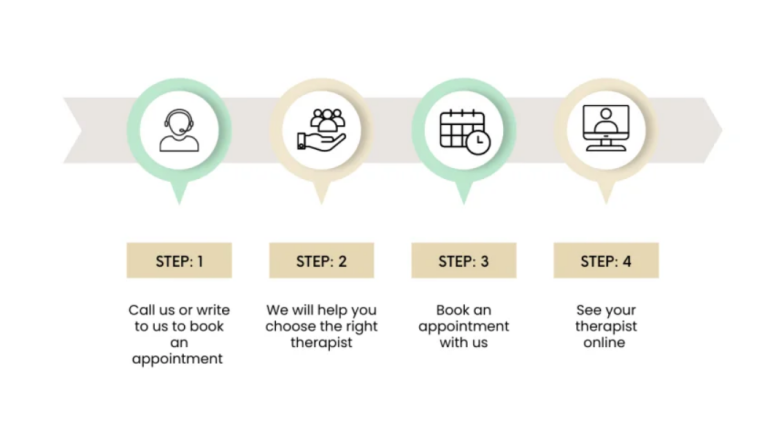
How to Book an Online Individual Counseling Session
With Inner Space

Ask A Therapist
‘Ask A Therapist’ is a platform to ask your questions related to Mental Health, Mindfulness & Emotional Well-Being to our team of qualified Therapists.

Symptoms Of Anxiety
The symptoms of anxiety can show up in the form of physical, mental, and emotional symptoms.
Your experience with anxiety can look completely different from another individual’s anxiety. Therefore, seeking help through a counselor can help you identify your symptoms and start your journey towards overcoming your anxiety.
Sometimes, anxiety can co-occur with depression. In such instances, you may experience a mix of the symptoms from both the disorders. If you would like to know more about Therapy for depression, click here.
Anxiety involves a wide range of symptoms and behaviours. Having anxiety can feel like you are fighting multiple battles at once. Counseling is an effective tool to manage these symptoms by addressing the root cause of your anxiety
Physical Symptoms
- Palpitations
- Upset Stomach
- Stress-eating
- Random body aches and migraines
- Sweating and trembling
- Feeling tired often
- Feeling dizzy or lightheaded
- Sleep Issues
- Intrusive Thoughts
Mental and Emotional Symptoms
- Racing thoughts
- Excessing worry about an event, person, or situation
- Avoiding social situations as a result of these thoughts
- Having unwanted and distressing thoughts or images that pop into your mind without your control.
- Low self-esteem
- Irritability
- Being unable to focus and pay attention
Meet Our Therapists & Counselors
Our therapists are trained psychologists helping people work through their difficulties, using an eclectic range of psychotherapies tailored to each client.


How We Can Help You Find The Right Counselor
The search for the right counselor can be a tedious task. At Inner Space, our process begins with understanding your difficulty briefly and matching you with the therapist on the basis of the challenges or concerns that they can help you with.
Our therapists at Inner Space have a Postgraduate Degree in Clinical or Counseling Psychology. By using explorative and compassion-centered strategies, we work towards building more understanding and opportunities for self-reflection within you.
Looking for guidance in finding your perfect therapist?
Answer a concise questionnaire and connect with providers tailored to you.
"What Our Clients Say about Our Online Individual Counseling Services"


FAQs for Online Individual Counseling and Therapy
There is no set time frame for therapy. The number of premarital counseling sessions for each individual is dependent on their needs and goals, the counselor’s theoretical approach, and the form of therapy they choose. Therefore, the number of sessions average anywhere between 6-12 sessions, and is usually an hour long.
The changes that you can expect from therapy are determined by your specific goals and concerns. Individuals can benefit from therapy by gaining insight into their experiences, developing healthy coping skills, improving communication and relationships, managing symptoms of mental health conditions, and achieving personal growth and self-improvement. The type and duration of therapy, as well as the individual’s unique circumstances, will determine the nature and extent of these changes.
Instead of giving direct advice, therapists typically assist individuals in exploring and comprehending their thoughts, feelings, and behaviours. They use techniques such as active listening, questioning, and reflection to assist clients in gaining insight, identifying areas for improvement, and developing coping skills. While providing education and information as needed, therapists aim to empower clients to make their own decisions and take responsibility for their lives.
No, you do not need to have a clinical diagnosis or disorder to seek counseling. Counseling is an open space for everyone. It offers a non-judgemental, safe-space to navigate through your issues, under professional guidance and support.